
Arizona 2024 - Trip Review

Updated: Nov 9, 2025

Arizona is known for a lot of things, not least of which being the National Parks within it. While I love our National Parks, I've always been a fan of staying away from the famous areas. There is nothing like finding some beautiful landscape, rare creature, or tiny roadside stop that's far outside of the beaten track.
We'd driven across the New Mexico western border that Friday, aimed for San Simon, Arizona, a very small town on I10 in Southern Arizona. Pulling into town, we went straight for some BLM land and knocked out in and around the car.
Our goal in Arizona was to find some rarer Crotalids (better known as rattlesnakes) by cruising the canyonlands, hiking, and ethically flipping. We'd had little luck cruising in, and a rare week of mild temperatures in August shut down much of the usual herp movement, so we moved areas frequently, passing back and forth through highway 80 on the first evening to some mild success, even a few lifers for me!
Moving on, we'd decided to pursue a couple of the smaller rattlesnake species and ended up at a campsite in the Chiricahua foothills just south of Portal. A fair amount of hiking and flipping turned up nothing, and we ended the night a bit discouraged. The next morning, I left my buddies behind to grab some supplies and plasticware from a nearby road-stop. On that quick drive, I ended up crossing the path of a group of Collared Peccary, which were super fun to watch run around.

Moving onwards, we'd decided the lack of movement in the far Southeast wasn't what we wanted and decided to move up into Tucson, cruising some more well-known herping roads in the evening, and searching for some of the iconic birds and mammals of the Tucson area. On the drive we ran into another person cruising for snakes, and we chatted briefly before making our way out again--just to run into him 30 minutes later after finally cruising a target snake--the Desert Kingsnake (Lampropeltis splendida.) After another long (but pleasant) conversation we moved on to Tucson, aiming for a known stretch of road with coral snakes in mind.

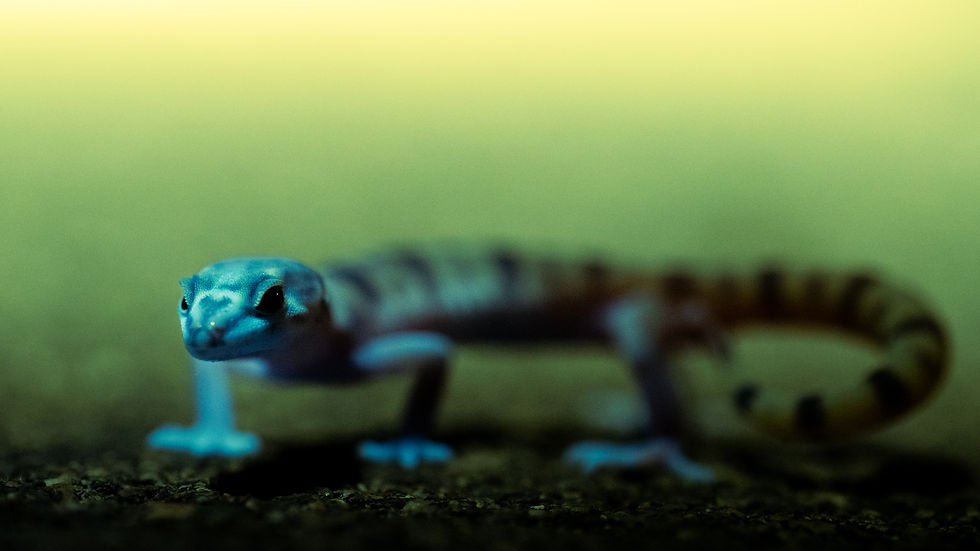
The night started great, with our first find being a very cool species that I hadn't been aware of -- a gecko, native to the US! The Western Banded Geckos were out en masse early in the evening, with us finding three cruising quite easily within about an hour. The snakes would prove much harder.

Before getting into the snakes of the evening, and the other wildlife found the next morning, I want to point out something I found super interesting about these geckos -- they glow!
Coleonyx variegatus (the geckos mentioned) glow under UV light! While I can't say I know why, neither does science just yet. We'd brought along a small UV flashlight for scorpions, and tested it on a variety of desert critters, resulting in these very cool photographs.

We continued cruising until the early morning, finally pulling onto public lands for the night around 5:30 am. The hours were spent cruising canyon after canyon, checking a million sticks, and taking short desert hikes. We turned up a fair few snakes, all of them being Western Diamondback Rattlesnakes. While the numbers were good, we were all a little discouraged to have found so few of the target species. No guarantees in wildlife, as they say.
Thanks for reading, and I hope you enjoyed. These posts take a lot of time and energy to put together, but I love sharing these stories in more detail.
Next up:
A Loop Through California

Comments